Posts

Showing posts matching the search for visibility

More on Threat Hunting

Image
Earlier this week hellor00t asked via Twitter : Where would you place your security researchers/hunt team? I replied : For me, "hunt" is just a form of detection. I don't see the need to build a "hunt" team. IR teams detect intruders using two major modes: matching and hunting. Junior people spend more time matching. Senior people spend more time hunting. Both can and should do both functions. This inspired Rob Lee to blog a response, from which I extract his core argument: [Hunting] really isn’t, to me, about detecting threats... Hunting is a hypothesis-led approach to testing your environment for threats. The purpose, to me, is not in finding threats but in determining what gaps you have in your ability to detect and respond to them... In short, hunting, to me, is a way to assess your security (people, process, and technology) against threats while extending your automation footprint to better be prepared in the future. Or simply stated, it’s ...

Enterprise Visibility Architect

Image
Last month in Security Application Instrumentation I wrote: Right now you're [developers] being taught (hopefully) "secure coding." I would like to see the next innovation be security application instrumentation, where you devise your application to report not only performance and fault logging, but also security and compliance logging. This is a forward-looking plea. In the meantime, we are stuck with numerous platforms, operating systems, applications, and data (POAD) for which we have zero visibility. I suggest that enterprises consider hiring or assigning a new role -- Enterprise Visibility Architect . The role of the EVA is to identify visibility deficiencies in existing and future POAD and design solutions to instrument these resources. What does this mean in real life? Here is an example. Let's say a company operates a FTP proxy for business use. Consider various stakeholders involved with that server and the sorts of visibility they might want: Data cen...

Build Visibility In

Image
Visibility has been a constant theme for this blog. Elsewhere I've used the phrase build visibility in to emphasize the need to integrate visbility requirements into the build and design phases of any technology project. Visibility should not be left as an afterthought. Building security in is required as well, but how can you determine how security is working if you have no visibility? Based on my experiences with technology deployments since the late 1990s, I've realized that the following cycle defines just about every project I've ever seen. The cycle is Feature -> Management -> "Security" -> Visibility. I am seeing this cycle at work in the mobile device space right now. Hardly anyone is thinking about how to determine if a mobile device (Blackberry, etc.) is compromised. The best we can do is imagine the sorts of attacks that might be happening to our mobile infrastructure, without visibility regarding how those devices might already be unde...

Visibility, Visibility, Visibility

Image
CIO Magazine's Fifth Annual Global State of Information Security features an image of a happy, tie-wearing corporate security person laying bricks to make a wall, while a dark-clad intruder with a crow bar violates the laws of physics by lifting up another section of the wall like it was made of fabric. That's a very apt reference to Soccer Goal Security , and I plan to discuss security physics in a future post. Right now I'd like to feature a few choice excerpts from the story: Awareness of the problematic nature of information security is approaching an all-time high. Out of every IT dollar spent, 15 cents goes to security. Security staff is being hired at an increasing rate. Surprisingly, however, enterprise security isn't improving ... Are you feeling the disquiet that comes from knowing there's no reason why your company can't be the next TJX? The angst of knowing that these modern plagues — these spam e-mails, these bots, these rootkits — will keep comi...

My Federal Government Security Crash Program

Image
In the wake of recent intrusions into government systems, multiple parties have been asking for my recommended courses of action. In 2007, following public reporting on the 2006 State Department breach, I blogged When FISMA Bites ,  Initial Thoughts on Digital Security Hearing . and What Should the Feds Do . These posts captured my thoughts on the government's response to the State Department intrusion. The situation then mirrors the current one well: outrage over an intrusion affecting government systems, China suspected as the culprit, and questions regarding why the government's approach to security does not seem to be working. Following that breach, the State Department hired a new CISO who pioneered the "continuous monitoring" program, now called "Continuous Diagnostic Monitoring" (CDM). That CISO eventually left State for DHS, and brought CDM to the rest of the Federal government. He is now retired from Federal service, but CDM remains. Years l...

Microsoft's Anemone Project

Image
While flying to Los Angeles this week I read a great paper by Microsoft and Michigan researchers: Reclaiming Network-wide Visibility Using Ubiquitous Endsystem Monitors . From the Abstract: Network-centric tools like NetFlow and security systems like IDSes provide essential data about the availability, reliability, and security of network devices and applications. However, the increased use of encryption and tunnelling has reduced the visibility of monitoring applications into packet headers and payloads (e.g. 93% of traffic on our enterprise network is IPSec encapsulated). The result is the inability to collect the required information using network-only measurements. To regain the lost visibility we propose that measurement systems must themselves apply the end-to-end principle: only endsystems can correctly attach semantics to traffic they send and receive. We present such an end-to-end monitoring platform that ubiquitously records per-flow data and then we show that this approach ...

NSM vs The Cloud

Image
A blog reader posted the following comment to my post Network Security Monitoring Lives : How do you use NSM to monitor the growing population of remote, intermittently connect mobile computing devices? What happens when those same computers access corporate resource hosted by a 3rd party such as corporate SaaS applications or storage in the cloud? This is a great question. The good news is we are already facing this problem today. The answer to the question can be found in a few old principles I will describe below. Something is better than nothing. I've written about this elsewhere: computer professionals tend to think in binary terms, i.e., all or nothing. A large number of people I encounter think 'if I can't get it all, I don't want anything." That thinking flies in the face of reality. There are no absolutes in digital security, or analog security for that matter. I already own multiple assets that do not strictly reside on any single network that I ...

Firewalls and the Need for Speed

Image
I was looking for resources on campus network design and found these slides  (pdf) from a 2011 Network Startup Resource Center presentation. These two caught my attention: This bothered me, so I Tweeted about it. This started some discussion, and prompted me to see what NSRC suggests for architecture these days. You can find the latest, from April 2018, here . Here is the bottom line for their suggested architecture: What do you think of this architecture? My Tweet has attracted some attention from the high speed network researcher community, some of whom assume I must be a junior security apprentice who equates "firewall" with "security." Long-time blog readers will laugh at that, like I did. So what was my problem with the original recommendation, and what problems do I have (if any) with the 2018 version? First, let's be clear that I have always differentiated between  visibility and control . A firewall is a poor visibility too...

Fight to Your Strengths

Image
Recently I mentioned the History Channel show Dogfights . One episode described air combat between fast, well-turning, lightly-armored-and-gunned Japanese Zeroes and slower, poor-turning, heavily-armored-and-gunned American F6F Hellcats. The Marine Top Gun instructor/commentator noted the only way the Hellcat could beat the Zero was to fight to its strengths and not fight the sort of battle the Zero would prefer. Often this meant head-to-head confrontations where the Hellcat's superior armor and guns would outlast and pummel the Zero. When I studied American Kenpo in San Antonio, TX, my instructor Curtis Abernathy expressed similar sentiments. He said "Make the opponent fight your fight. Don't try to out-punch a boxer. Don't try to out-kick a kicker. Don't try to wrestle a grappler." And so on. I thought about these concepts today waiting in another airport. I wondered what sorts of strengths network defenders might have, and if we could try forcin...

Technical Visibility Levels

Image
It's no secret that I think technical visibility is the key to trustworthy technology. Via Twitter I wrote The trustworthiness of a digital asset is limited by the owner's capability to detect incidents compromising the integrity of that asset. This topic has consumed me recently as relatively closed but IP-enabled systems proliferate. This ranges from handheld computers (iPhone, Blackberry, etc.) all the way to systems hosted in the cloud. How are we supposed to trust any of them? One of the first problems we should address is how to describe the level of technical visibility afforded by these technologies. The following is very rough and subject to modification, but I'm thinking in these terms right now. Level 0. System status available only by observing explicit failure. Level 1. Anecdotal status reporting or limited status reporting. Level 2. Basic status reporting via portal or other non-programmatic interface. Level 3. Basic logging of system state, performanc...

Thoughts on Cloud Security

Image
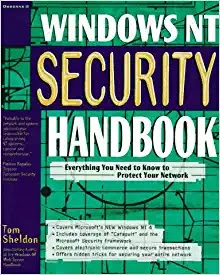
Recently I've been reading about cloud security and security with respect to DevOps. I'll say more about the excellent book I'm reading, but I had a moment of déjà vu during one section. The book described how cloud security is a big change from enterprise security because it relies less on IP-address-centric controls and more on users and groups. The book talked about creating security groups, and adding users to those groups in order to control their access and capabilities. As I read that passage, it reminded me of a time long ago, in the late 1990s, when I was studying for the MCSE, then called the Microsoft Certified Systems Engineer. I read the book at left, Windows NT Security Handbook, published in 1996 by Tom Sheldon. It described the exact same security process of creating security groups and adding users. This was core to the new NT 4 role based access control (RBAC) implementation. Now, fast forward a few years, or all the way to today, and consider the ...

Implementing Enterprise Visibility by Leading Change

I've been advocating increased digital situational awareness via network security monitoring and related enterprise visibility initiatives for several years. Recently I read a Harvard Business Review case study called Leading Change: Why Transformation Efforts Fail by John P. Kotter. His eight stage process for creating a major change include: Establish a sense of urgency. Create a guiding coalition. Develop a vision and strategy. Communicate the change vision. Empower broad-based action. Generate short-term wins. Consolidate gains and produce more change. Anchor new approaches in the culture. Failure to follow these eight steps often result in failed change efforts. Kotter notes for item 1 that the goal is to make the status quo seem more dangerous than launching into the unknown... When is the urgency rate high enough? [T]he answer is when about 75% of a company's management is honestly convinced that business-as-usual is totally unacceptable. Consid...

Managing Security in Economic Downturns

Image
You don't need to read this blog for news on the global economic depression. However, several people have asked me what it means for security teams, especially when Schneier Agrees: Security ROI is "Mostly Bunk" . No one can generate cash by running a security team; the best we can do is save money. If your security team generates cash, you're either a MSSP, a collection agency of some sort (these do exist, believe it or not!), in need of being spun-off, or not accounting for all of your true costs. Putting the ROI debate aside, these are tough economic times. Assuming we can all stay employed, we might be able to work the situation to our advantage. Nothing motivates management like a financial argument. See if one or more of the following might work to your advantage, because of the downturn. Promote centralization and consolidation. The more large organizations I've joined, consulted for, or met, the more I see that successful ones have centralized, cons...

Defender's Dilemma vs Intruder's Dilemma

Image
This is a follow-up to my post Response for Daily Dave . I realized I had a similar exchange three years ago, summarized in my post Response to Daily Dave Thread . Since I don't seem to be making much progress in this debate, I decided to render it in two slides. First, I think everyone is familiar with the Defender's Dilemma. The intruder only needs to exploit one of the victims in order to compromise the enterprise. You might argue that this isn't true for some networks, but in most places if you gain a foothold it's quickly game over elsewhere. What Dave and company don't seem to appreciate is that there is a similar problem for attackers. I call it the Intruder's Dilemma. The defender only needs to detect one of the indicators of the intruder’s presence in order to initiate incident response within the enterprise. What's interesting about this reality is that it applies to a single system or to a collection of systems. Even if the intruder only compr...

Hint of Visibility in the Cloud

Image
Visibility in the cloud is one of my concerns these days. When someone else hosts and processes your data, how can you tell if it is "secure?" I found Robert Graham's post Gmail now shows IP address log to be very interesting. Robert explains how Gmail using HTTPS doesn't always use HTTPS (which is old news, as he says), but monitoring (of a sort) is now available to determine if someone else is using your account. According to the Gmail blog , Gmail will soon make available logs of IPs using your Gmail account. I agree that the technique could be applied to other Web and cloud applications. How about a record of my Amazon S3 account?

Incident Severity Ratings

Much of digital security focuses on pre-compromise activities. Not as much attention is paid to what happens once your defenses fail. My friend Bamm brought this problem to my attention when he discussed the problem of rating the severity of an incident. He was having trouble explaining to his management the impact of an intrusion, so he asked if I had given any thought to the issue. What follows is my attempt to apply a framework to the problem. If anyone wants to point me to existing work, please feel free. This is not an attempt to put a flag in the ground. We're trying to figure out how to talk about post-compromise activities in a world where scoring vulnerabilities receives far more attention. This is a list of factors which influence the severity of an incident. It is written mainly from the intrusion standpoint. In other words, an unauthorized party is somehow interacting with your asset. I have ordered the options under each category such that the top items in eac...

Bejtlich Teaching at Black Hat Trainings 8-9 Dec 2014

Image
I'm pleased to announce that I will be teaching  one class  at Black Hat Trainings 2014 in Potomac, MD, near DC, on 8-9 December 2014. The class is  Network Security Monitoring 101 . I taught this class in Las Vegas in July 2013 and 2014, and Seattle in December 2013. I posted  Feedback from Network Security Monitoring 101 Classes  last year as a sample of the student commentary I received. This class is the perfect jumpstart for anyone who wants to begin a network security monitoring program at their organization. You may enter with no NSM knowledge, but when you leave you'll be able to understand, deploy, and use NSM to detect and respond to intruders, using open source software and repurposed hardware. The first discounted registration deadline is 11:59 pm EDT October 31st. The second discounted registration deadline (more expensive than the first but cheaper than later) ends 11:59 pm EST December 5th. You can  register here . I recentl...