Posts

Showing posts with the label securityonion

Troubleshooting NSM Virtualization Problems with Linux and VirtualBox
Image
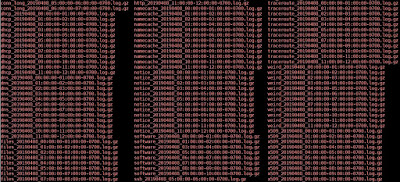
I spent a chunk of the day troubleshooting a network security monitoring (NSM) problem. I thought I would share the problem and my investigation in the hopes that it might help others. The specifics are probably less important than the general approach. It began with ja3 . You may know ja3 as a set of Zeek scripts developed by the Salesforce engineering team to profile client and server TLS parameters. I was reviewing Zeek logs captured by my Corelight appliance and by one of my lab sensors running Security Onion. I had coverage of the same endpoint in both sensors. I noticed that the SO Zeek logs did not have ja3 hashes in the ssl.log entries. Both sensors did have ja3s hashes. My first thought was that SO was misconfigured somehow to not record ja3 hashes. I quickly dismissed that, because it made no sense. Besides, verifying that intution required me to start troubleshooting near the top of the software stack. I decided to start at the bottom, or close to the bottom. I ha...
Importing Pcap into Security Onion

Image
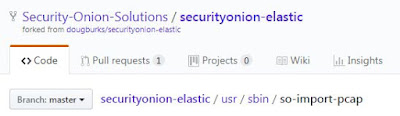
Within the last week, Doug Burks of Security Onion  (SO) added a new script that revolutionizes the use case for his amazing open source network security monitoring platform. I have always used SO in a live production mode, meaning I deploy a SO sensor sniffing a live network interface. As the multitude of SO components observe network traffic, they generate, store, and display various forms of NSM data for use by analysts. The problem with this model is that it could not be used for processing stored network traffic. If one simply replayed the traffic from a .pcap file, the new traffic would be assigned contemporary timestamps by the various tools observing the traffic. While all of the NSM tools in SO have the independent capability to read stored .pcap files, there was no unified way to integrate their output into the SO platform. Therefore, for years, there has not been a way to import .pcap files into SO -- until last week! Here is how I tested the new so-import-pc...

Try the Critical Stack Intel Client

Image
You may have seen in my LinkedIn profile that I'm advising a security startup called Critical Stack . If you use Security Onion or run the Bro network security monitoring platform (NSM), you're ready to try the Critical Stack Intel Client . Bro is not strictly an intrusion detection system that generates alerts, like Snort. Rather, Bro generates a range of NSM data, including session data, transaction data, extracted content data, statistical data, and even alerts -- if you want them. Bro includes an intelligence framework that facilitates integrating various sources into Bro. These sources can include more than just IP addresses. This Bro blog post explains some of the options, which include: Intel::ADDR Intel::URL Intel::SOFTWARE Intel::EMAIL Intel::DOMAIN Intel::USER_NAME Intel::FILE_HASH Intel::FILE_NAME Intel::CERT_HASH This Critical Stack Intel Client makes it easy to subscribe to over 30 threat feeds for the Bro intelligence framework. The screen c...

A Brief History of Network Security Monitoring

Image
Last week I was pleased to deliver the keynote at the first Security Onion Conference in Augusta, GA, organized and hosted by Doug Burks. This was probably my favorite security event of the year, attended by many fans of Security Onion and the network security monitoring (NSM) community. Doug asked me to present the history of NSM. To convey some of the milestones in the development of this operational methodology, I developed these slides  (pdf). They are all images, screen captures, and the like, but I promised to post them. For example, the image at left is the first slide from a Webinar that Bamm Visscher and I delivered on 4 December 2002, where we presented the formal definition of NSM the first time. We defined network security monitoring as the collection, analysis, and escalation of indications and warnings to detect and respond to intrusions. You may recognize similarities with the intelligence cycle and John Boyd's Observe - Orient - Decide Act (OODA) loop. Tha...

Bejtlich Teaching at Black Hat Trainings 8-9 Dec 2014

Image
I'm pleased to announce that I will be teaching  one class  at Black Hat Trainings 2014 in Potomac, MD, near DC, on 8-9 December 2014. The class is  Network Security Monitoring 101 . I taught this class in Las Vegas in July 2013 and 2014, and Seattle in December 2013. I posted  Feedback from Network Security Monitoring 101 Classes  last year as a sample of the student commentary I received. This class is the perfect jumpstart for anyone who wants to begin a network security monitoring program at their organization. You may enter with no NSM knowledge, but when you leave you'll be able to understand, deploy, and use NSM to detect and respond to intruders, using open source software and repurposed hardware. The first discounted registration deadline is 11:59 pm EDT October 31st. The second discounted registration deadline (more expensive than the first but cheaper than later) ends 11:59 pm EST December 5th. You can  register here . I recentl...

Bejtlich Teaching at Black Hat USA 2014

Image
I'm pleased to announce that I will be teaching one class at  Black Hat USA 2014   2-3 and 4-5 August 2014 in Las Vegas, Nevada. The class is  Network Security Monitoring 101 . I've taught this class in Las Vegas in July 2013 and Seattle in December 2013. I posted  Feedback from Network Security Monitoring 101 Classes  last year as a sample of the student commentary I received. This class is the perfect jumpstart for anyone who wants to begin a network security monitoring program at their organization. You may enter with no NSM knowledge, but when you leave you'll be able to understand, deploy, and use NSM to detect and respond to intruders, using open source software and repurposed hardware. The first discounted registration deadline is 11:59 pm EDT June 2nd. The second discounted registration deadline (more expensive than the first but cheaper than later) ends 11:59 pm EDT July 26th. You can  register here . Please note: I have no plans ...

The Limits of Tool- and Tactics-Centric Thinking

Image
Earlier today I read a post by Dave Aitel to his mailing list titled  Drinking the Cool-aid . Because it includes a chart you should review, I included a screenshot of it in this blog, below. Basically Dave lists several gross categories of defensive digital security technology and tools, then lists what he perceives as deficiencies and benefits of each. Embedded in these pluses and minuses are several tactical elements as well. Please take a look at the original or my screenshot. I had three reactions to this post. First, I recognized that it's written by someone who is not responsible for defending any network of scale or significance. Network defense is more than tools and tactics. It's more often about people and processes. My initial response is unsatisfying and simplistic, however, even though I agree broadly with his critiques of anti-virus, firewalls, WAFs, and some traditional security technology. Second, staying within the realm of tools and tactics, Dave i...