Posts

Showing posts with the label cloud

Happy Birthday TaoSecurity.com

Image
Nineteen years ago this week I registered the domain taosecurity.com: Creation Date: 2000-07-04T02:20:16Z This was 2 1/2 years before I started blogging, so I don't have much information from that era. I did create the first taosecurity.com Web site shortly thereafter. I first started hosting it on space provided by my then-ISP, Road Runner of San Antonio, TX. According to archive.org, it looked like this in February 2002 . That is some fine-looking vintage hand-crafted HTML. Because I lived in Texas I apparently reached for the desert theme with the light tan background. Unfortunately I didn't have the "under construction" gif working for me. As I got deeper into the security scene, I decided to simplify and adopt a dark look. By this time I had left Texas and was in the DC area, working for Foundstone. According to archive.org, the site look like this in April 2003 . Notice I've replaced the oh-so-cool picture of me doing Ame...
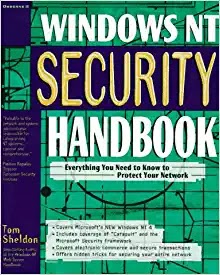
Thoughts on Cloud Security

Image
Recently I've been reading about cloud security and security with respect to DevOps. I'll say more about the excellent book I'm reading, but I had a moment of déjà vu during one section. The book described how cloud security is a big change from enterprise security because it relies less on IP-address-centric controls and more on users and groups. The book talked about creating security groups, and adding users to those groups in order to control their access and capabilities. As I read that passage, it reminded me of a time long ago, in the late 1990s, when I was studying for the MCSE, then called the Microsoft Certified Systems Engineer. I read the book at left, Windows NT Security Handbook, published in 1996 by Tom Sheldon. It described the exact same security process of creating security groups and adding users. This was core to the new NT 4 role based access control (RBAC) implementation. Now, fast forward a few years, or all the way to today, and consider the ...

Network Forensics Vendors: Get in the Cloud!

Image
I know some of us worry that the advent of the "cloud" will spell the end of Network Security Monitoring and related network-centric visibility and instrumentation measures. I have a proposal for any network forensics vendors reading this blog: get in the cloud! For example, imagine you are a proxy-in-the-cloud (PITC) provider, like ScanSafe , now owned by Cisco. You provide a Web portal to your customers so they can see what bad sites employees were not allowed to visit. But what about all the subtle traffic that evaded your filters, block lists, heuristics, and other defensive mechanisms? What about the insider stealing intellectual property, indistinguishable from a "normal employee?" How does your abuse-centric Web portal address the sorts of threats that really matter? To me, one answer is to deploy a network forensics solution like NetWitness or Solera in front of your PITC infrastructure. The PITC vendor must have a way to identify legitimate clients...

Initial Thoughts on Cloud A6

Image
I'm a little late to this issue, but let me start by saying I read Craig Balding's RSA Europe 2009 Presentation this evening. In it he mentioned something called the A6 Working Group. I learned this is related to several blog posts and a Twitter discussion. In brief: In May, Chris Hoff posted Incomplete Thought: The Crushing Costs of Complying With Cloud Customer “Right To Audit” Clauses , where Chris wrote Cloud providers I have spoken to are being absolutely hammered by customers acting on their “ right to audit ” clauses in contracts. In June, Craig posted Stop the Madness! Cloud Onboarding Audits - An Open Question... where he wondered Is there an existing system/application/protocol whereby I can transmit my policy requirements to a provider, they can respond in real-time with compliance level and any additional costs, with less structured/known requirements responded to by a human (but transmitted the same way)? Later in June, Craig posted in Vulnerability Scanning ...

Enterprise Data Centralization

I've written about thin client computing for several years. However, I haven't written about a natural complement to thin client computing -- enterprise data centralization. In this world, the thin client is merely a window to a centralized data store (sufficiently implemented according to business continuity processes and methods like redundancy, etc.). That vision can be implemented today, albeit really only where low-latency, uninterrupted, decent bandwidth is available. Thanks to EDD Blog I just read an article that makes me think legal forces will drive the adoption of this strategy: Opinion: Data Governance Will Eclipse CIO Role by Jay Cline. He writes: In response to the new U.S. Federal Rules on Civil Procedure regarding legal discovery, for example, several general counsels have ordered the establishment of centralized "litigation servers" that store copies of all of the companies’ electronic files. They think this is the only way to preserve and chea...

Security in the Cloud

A blog reader recently asked me to comment on this Security in the Cloud debate. First, a word on the opposing sides. The Yes proponent, Brad Miller, is CEO of Perimeter Internetworking . His company looks like a managed security services firm, except they are latched onto Gartner 's security in the cloud idea. That is derived from MCI 's (now Verizon 's) concept of filtering traffic on its backbones. I find it odd that a company like Perimeter Internetworking can ride the cloud bandwagon when they are not in the cloud! The No proponent is Bruce Schneier, CTO of Counterpane . He is not exactly saying no to the idea though: [A] choice between implementing network security in the middle of the network - in the cloud - or at the endpoints is a false dichotomy. No single security system is a panacea, and it's far better to do both... I'm all in favor of security in the cloud. If we could build a new Internet today from scratch, we would embed a lot of security fu...