Posts

Real Security Is Threat-Centric
Image
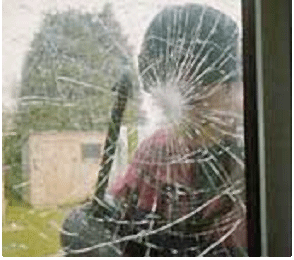
Apparently there's been a wave of house burglaries in a nearby town during the last month. As you might expect, local residents responded by replacing windows with steel panels, front doors with vault entrances, floors with pressure-sensitive plates, and whatever else "security vendors" recommended. Town policymakers created new laws to mandate locking doors, enabling alarm systems, and creating scorecards for compliance. Home builders decided they needed to adopt "secure building" practices so all these retrofitted measures were "built in" future homes. Oh wait, this is the real world! All those vulnerability-centric measures I just described are what too many "security professionals" would recommend. Instead, police identified the criminals and arrested them. From Teen burglary ring in Manassas identified : Two suspects questioned Friday gave information about the others, police said. Now this crew is facing prosecution. That's...

Celebrate FreeBSD 8.0 Release with Donation

Image
With the announcement of FreeBSD 8.0 , it seems like a good time to donate to the FreeBSD Foundation , a US 501(c)3 charity. The Foundation funds and manages projects, sponsors FreeBSD events, Developer Summits and provides travel grants to FreeBSD developers. It also provides and helps maintain computers and equipment that support FreeBSD development and improvements. I just donated $100. Will anyone match me? Thank you!

Historical Video on AFCERT circa 2000

Image
I just uploaded a video that some readers might find entertaining. This video shows the United States Air Force Computer Emergency Response Team (AFCERT) in 2000. Kelly AFB, Security Hill, and Air Intelligence Agency appear. The colonel who leads the camera crew into room 215 is James Massaro, then commander of the Air Force Information Warfare Center. The old Web-based interface to the Automated Security Incident Measurement (ASIM) sensor is shown, along with a demo of the "TCP reset" capability to terminate TCP-based sessions. We have a classic quote about a "digital Pearl Harbor" from Winn Schwartau, "the nation's top information security analyst." Hilarious, although Winn nails the attribution and national leadership problems; note also the references to terrorists in this pre-9/11 video. "Stop the technology madness!" Incidentally, if the programs shown were "highly classified," they wouldn't be in this video! I was trave...

Tort Law on Negligence

Image
If any lawyers want to contribute to this, please do. In my post Shodan: Another Step Towards Intrusion as a Service , some comments claim "negligence" as a reason why intruders aren't really to blame. I thought I would share this case from Tort Law , page 63: In Stansbie v Troman [1948] 2 All ER 48 the claimant, a householder, employed the defendant, a painter. The claimant had to be absent from his house for a while and he left the defendant working there alone. Later, the defendant went out for two hours leaving the front door unlocked. He had been warned by the claimant to lock the door whenever he left the house. While the house was empty someone entered it by the unlocked front door and stole some of the claimant's posessions. The defendant was held liable for the claimant's loss for, although the criminal action of a third party was involved, the possibility of theft from an unlocked house was one which should have occurred to the defendant. So, the ...

Review of Martin Libicki's Cyberdeterrence and Cyberwar

Image
Amazon.com just posted my three star review of Martin Libicki's Cyberdeterrence and Cyberwar . I've reproduced the review in its entirety here because I believe it is important to spread the word to any policy maker who might read this blog or be directed here. I've emphasized a few points for readability. As background, I am a former Air Force captain who led the intrusion detection operation in the AFCERT before applying those same skills to private industry, the government, and other sectors. I am currently responsible for detection and response at a Fortune 5 company and I train others with hands-on labs as a Black Hat instructor. I also earned a master's degree in public policy from Harvard after graduating from the Air Force Academy. Martin Libicki's Cyberdeterrence and Cyberwar (CAC) is a weighty discussion of the policy considerations of digital defense and attack. He is clearly conversant in non-cyber national security history and policy, and that knowl...

Shodan: Another Step Towards Intrusion as a Service

Image
If you haven't seen Shodan yet, you're probably not using Twitter as a means to stay current on security issues. Shoot, I don't even follow anyone and I heard about it. Basically a programmer named John Matherly scanned a huge swath of the Internet for certain TCP ports (80, 21, 23 at least) and published the results in a database with a nice Web front-end. This means you can put your mind in Google hacking mode, find vulnerable platforms, maybe add in some default passwords (or not), and take over someone's system. We're several steps along the Intrusion as a Service (IaaS) path already! Incidentally, this idea is not new. I know at least one company that sold a service like this in 2004. The difference is that Shodan is free and open to the public. Shodan is a dream for those wanting to spend Thanksgiving looking for vulnerable boxes, and a nightmare for their owners. I would not be surprised if shodan.surtri.com disappears in the next few days after r...

I'm Surprised That Your Kung Fu Is So Expert

Image
This story is so awesome. Hacks of Chinese Temple Were Online Kung Fu, Abbot Says A hacker who posted a fake message on the Web site of China's famous Shaolin Temple repenting for its commercial activities was just making a mean joke, the temple's abbot was cited as saying by Chinese state media Monday. That and previous attacks on the Web site were spoofs making fun of the temple, Buddhism and the abbot himself, Shi Yongxin was cited as telling the People's Daily. "We all know Shaolin Temple has kung fu," Shi was quoted as saying. "Now there is kung fu on the Internet too, we were hacked three times in a row." Why am I not surprised that a Shaolin monk has a better grasp of the fundamentals of computer security than some people in IT? Bonus: Props to anyone who recognizes the title of this post.